
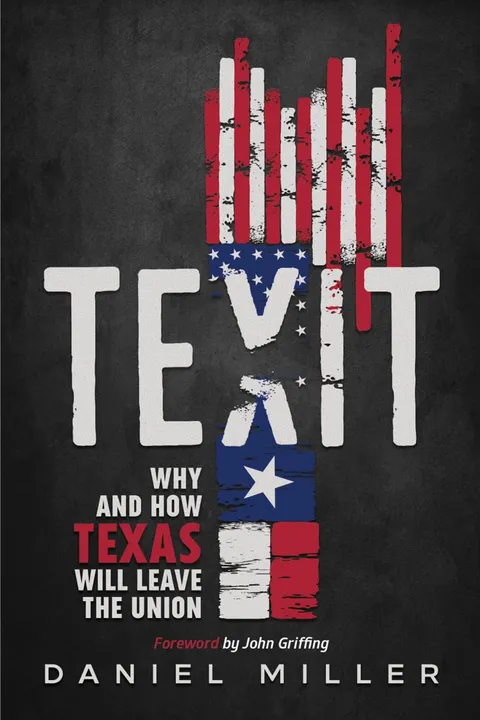
TEXIT
Why And How Texas Will Leave The Union
Texit is a groundbreaking exploration of one of the most controversial and intriguing political movements of our time. With the precision of a skilled historian and the passion of a true Texan, Miller presents a compelling case for why and how the Lone Star State could — and should — reclaim its sovereignty.
Drawing on two decades of dedicated research and activism, Miller takes readers on a journey through Texas’s unique history, from its days as an independent republic to its current status as a powerhouse state within the Union. He meticulously examines the legal, economic, and cultural foundations that make Texas not just capable of independence, but potentially better off as a sovereign nation.
“Texit” isn’t merely a manifesto; it’s a practical roadmap. Miller addresses the burning questions on every skeptic’s mind: How would an independent Texas handle its economy, military defense, or social programs? What about international relations or currency? With clear-eyed realism and innovative solutions, he tackles these challenges head-on, painting a vivid picture of a prosperous, free Republic of Texas.
But this book is more than a secession plan — it’s a wake-up call. Miller articulately voices the frustrations of many Texans who feel their values and way of life are under siege from an overreaching federal government. He makes a passionate argument for self-determination, not just for Texas, but for all peoples who cherish liberty and local governance.
Whether you’re a proud Texan, a student of political movements, or simply curious about one of the most talked-about ideas in modern American politics, “Texit” is an essential read. Prepare to have your assumptions challenged and your imagination sparked by this audacious vision of a Texas unbound.
Editorial Review ★★★★★ A Comprehensive Analysis of Texas Independence Daniel Miller’s “Texit” presents a meticulously researched and thought-provoking examination of Texas independence that transcends typical political commentary. Drawing from two decades of research and activism, Miller delivers a thorough analysis that explores both the philosophical foundations and practical considerations of Texas sovereignty.
The book’s greatest strength lies in its systematic approach to a complex topic. Miller moves beyond rhetorical arguments to address concrete questions about how an independent Texas would function. His examination of practical matters – from economic considerations to military defense, from international relations to social programs – provides readers with a detailed framework for understanding the challenges and opportunities such a transition would present.
Particularly noteworthy is Miller’s historical analysis. By tracing Texas’s journey from independent republic to state and examining its unique position within the Union, he provides essential context for understanding current independence discussions. The author demonstrates remarkable skill in connecting historical precedents to contemporary challenges, creating a narrative that feels both grounded in tradition and relevant to modern concerns.
The narrative gains considerable momentum when exploring the practical aspects of independence. Rather than avoiding difficult questions, Miller tackles them head-on, offering innovative solutions and detailed analysis of how an independent Texas might address various governmental, economic, and social challenges. His “let us reason together” approach, as noted by reviewer David Carr, makes complex political and economic concepts accessible to readers from various backgrounds.
Where the book truly excels is in its balanced treatment of self-determination as a broader principle. Miller frames Texas independence not merely as a regional issue but as part of a larger discussion about local governance and political self-determination. This broader context, supported by insights from international observers like George Konstantinidis (former UKIP Regional Chairman) and Lord Christopher Monckton, helps readers understand Texas independence within a global context.
The author’s writing style deserves special mention, managing to be both scholarly and engaging. Miller presents complex legal, economic, and political concepts with clarity and precision, making the material accessible without oversimplifying it. His passion for the subject matter shines through while maintaining analytical rigor.
“Texit” succeeds in providing both a theoretical foundation and a practical roadmap for Texas independence. Whether readers ultimately agree with Miller’s conclusions or not, they will find a thoroughly researched analysis that raises important questions about sovereignty, governance, and self-determination in the modern era.
For readers seeking to understand one of the most significant political movements in contemporary American politics, this book offers invaluable insights into both the philosophical underpinnings and practical considerations of Texas independence. Miller has created a work that will serve as a crucial reference point in ongoing discussions about the future of Texas and the nature of political sovereignty in the 21st century.